Monday, 14 September 2015

It's good to be back...

After spending 11 weeks in Romania seeing and ringing some great species of bird, I can happily say that I'm pleased to be back home. The winds have been quite calm, which has allowed Silvia and myself to get out and do some mist netting at a couple of our regular sites. The first site we tried was a pine forest where we've had good catches of small passerines during late summer/early autumn in previous years. The forest was very quite and we only managed 30  or so birds. The next few days we tried some mixed willow scrub/conifer re-growth. This was definitely where all of the birds were hanging out. Over the space of 3 days and only about 10 hours netting we managed to trap and ring over 220 birds. Highlights over the 4 days netting were easily Firecrest and Redstart.


Firecrest (hopefully not the only one for this year!)


Redstart

Total number of birds netted in the 4 days!

As well as netting we've also headed out on to the hills dazzling, to see what birds are 'in'. Despite (understandably) very few birds, we've still managed to catch 7 Common Snipe, 6(+1) Skylark, 1 Meadow Pipit and 2 Tawny Owl. Not bad for mid September, roll on the autumn!


Tawny Owl

Friday, 11 September 2015

Worth waiting for


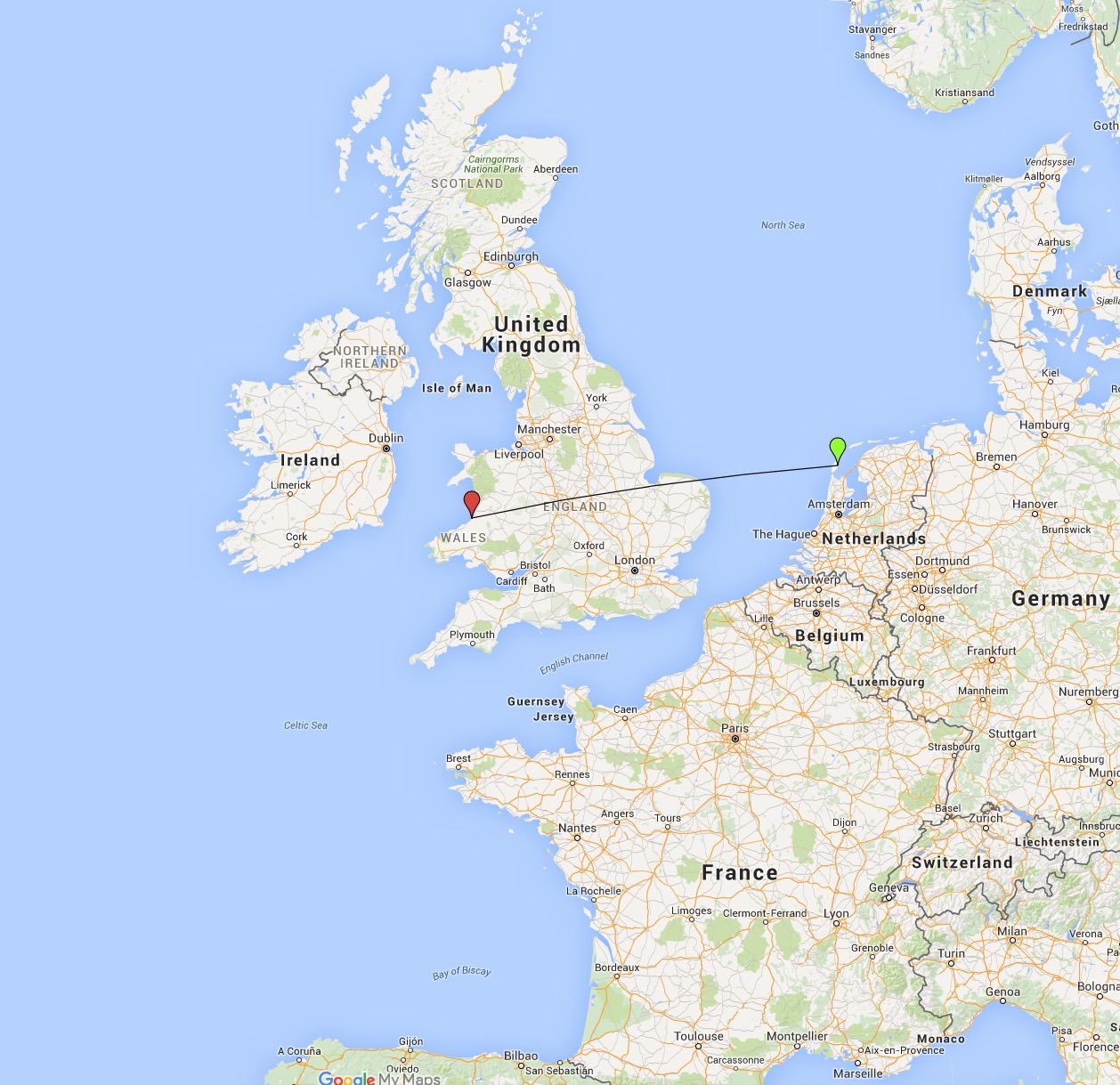
I recently re-submitted details of this Dutch-ringed Bar-tailed Godwit that we controlled at Llanrhystud on 11th May 2014. I have just received the original ringing details from the BTO and it was first caught on 25th May 1994 at Zwinweg, Texel, The Netherlands. 


The recovery report shows an elapsed time of 7,291 days and a distance travelled of 617 kms. Whilst the elapsed time is impressive enough how much more impressive would the distance travelled be if we knew how far this bird had actually travelled in the last 20 years? I will be trying to contact the Dutch ringers to see what previous sightings there are of it - someone else must surely have reported it in all that time ! 

The oldest ringed Bar-tailed Godwit reported through BTO ringing was an amazing 31 years and 4 months between ringing and recovery so by comparison this one hadn't even reached retirement age!

Tuesday, 1 September 2015

Seeking Sandwiches but Dunlin prove to be the bread and butter

Over the last 3 nights there has been a set of perfect autumn tides for netting terns and waders at Ynyslas. At this site, for a successful catch, the high tides need to coincide with a good passages of birds, calm weather and a new moon or thick cloud. You also need to put the nets in just the right location! 


Looking good so far - nets sets at Ynyslas for tern and wader ringing.

Rarely do all of these things combine to give perfect conditions. On Saturday night the tide was a bit too early so it wasn't quite dark enough as the birds gathered and they could see the nets. Then the good folk of Aberdyfi decided to celebrate the Bank Holiday with a big firework display on the beach right on high tide which sent everything scarpering (including my dog!!!).  On Sunday night everything was near perfect.......that is until the good folk of Borth sought a fireworks rematch and tried to outdo Aberdyfi's previous night's exploits!!! Result, more scarpering birds (although at least I'd left the dog at home this time!).  Monday night was noticeably less fireworky but just a few Beaufort scales in excess of ideal and the billowing, whistling, nets proved too noticeable in the bright moonlight. This all sounds like a catalogue of excuses for not catching anything but, despite things being far from perfect, Sunday night in particular was very successful. Relative new boy Jacques and his girlfriend Bethan along with Jane and I had a catch of 94 birds which kept us busy enough! If they had all been Sandwich Terns it would have been amazing and a massive boost to our small colour-ringing scheme but as it turned out only 4 of them were. 


This Sandwich Tern was originally ringed at Ynyslas on passage on 4th August 2011 and hasn't been recorded anywhere else since. This time it got a colour-ring so we are looking forward to more records of it in the future!

The bulk of the catch, as is usually the case though at Ynyslas, were Dunlin.

The total of new birds caught over the three nights was 137 Dunlin, 5 Ringed Plover, 5 Turnstone, 5 Sandwich Tern, 3 Sanderling, 2 Knot and an Oystercatcher. Not too bad given the moon, wind and fireworks but so much less than it could have been with just a little more luck on our side!

Saturday, 22 August 2015

Norwegian Hawfinch update

Dave reminds me that I hadn't posted the details of our 2nd Norwegian Hawfinch recovery! The bird, an adult male, was ringed at our main feeding site near Dolgellau on 22nd March 2014. It was controlled by a Norwegian ringer at Batteriveien nord, Lyngdal, Vest-Agder on 13th April 2015, 387 days after original ringing and 905 kms distant. It will be very interesting to see if we can get a "bounce" and retrap him back in Wales this winter.


The Red markers show the two recovery locations (most recent bird on the left) and the Green marker shows the original ringing location of the Norwegian-ringed control. The Blue marker is the main feeding site.

The map above clearly indicates that there are regular movements occurring between South Norway and Wales and therefore what we might once have regarded as a resident population is obviously augmented by continental visitors in the winter months.

Monday, 17 August 2015

Haw-inspiring!

Well, another Hawfinch season has come to an end, bruised and bitten fingers slowly healing!

2015 has been something of a revelation though, for a number of reasons. Firstly, our year's total of 184 new birds is a record for this project, even beating the first year's number by some margin. Secondly, I've had the real pleasure of enjoying my whoosh-netting permit for it's first season........186 self-caught Hawfinches later and I'm starting to deal with extracting ten biters from a whoosh-net in one go.......on my own. Thirdly, we had the company of research scientist Will Kirby during the breeding season, who was radio-tagging and tracking some of our birds as part of the wider study on the species currently being conducted by the RSPB. Largely as a result of Will's involvement, we extended the trapping season into the summer period, catching 46 fledged juveniles from late-June to the end of July, adding another dimension to this project and hopefully some interesting future data.

    
One of the sixteen female birds we tagged. The intention being to follow these birds back to their nests, monitoring breeding outcomes and gathering data on site selection.
     

   The long and short of it: Above - Will's tracking work revealed some fascinating site selection, such as this quite unexpected nest site low in a Hawthorn in 'ffridd' type habitat; Below - a more typical site, high in a large Oak, requiring a fully extended ladder and a Red Bull-fuelled A.V.Cross!


The two young in the nest located in the large Oak above. Unfortunately all three nest we managed to erect nest cameras on failed in three days of exceptionally wet, cold and windy weather in early-May. Later nests appeared to fare better though, with good numbers of juveniles noted generally later in the season.

As well as the record ringing totals for the year, it's been another exceptional year for re-sightings, with over 400 positive sightings of colour-ringed birds in the locality. The majority of these have been in Trevor and Chris Bashford's garden in Dolgellau which continues to draw an extraordinary number of birds to the small amount of sunflower seed provided each day, with over 160 different birds recorded in the first five months of the year alone! The only negative news from this Hawfinch hotspot being two very worrying cases of likely Trichomonosis noted in visiting birds, which we can only hope does not become a serious threat to this species.

Exciting news of a second movement of one of our ringed birds to Norway emerged in May, thankfully this individual still being alive and well, unlike the previous long distance traveller taken by a Tawny Owl! (more news on this movement to follow).

   
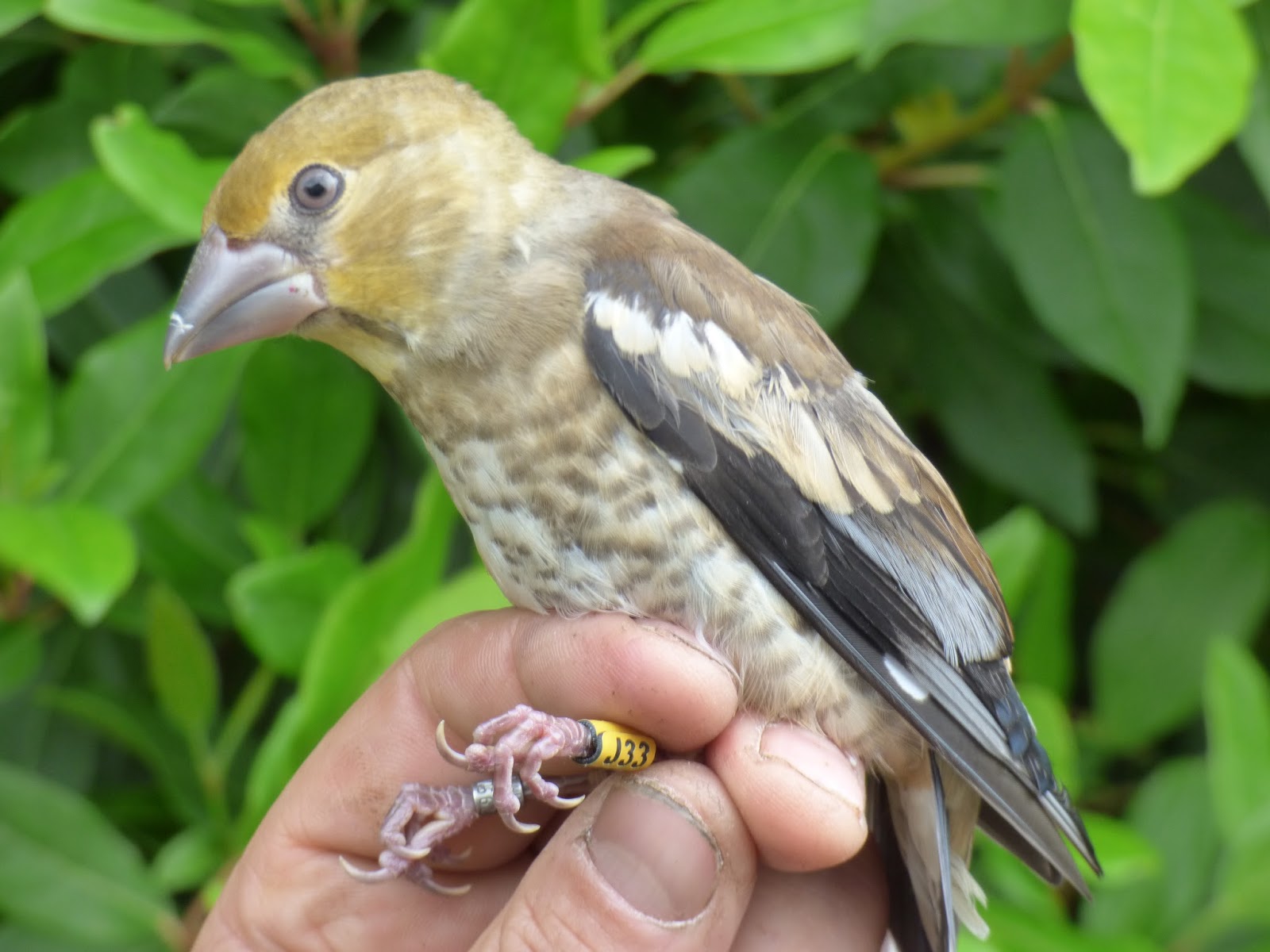
  J33, one of 46 fledged juveniles colour-ringed during June and July. Hopefully this sample will  help add insight to the survival, breeding and movements of locally bred birds.

The next challenge is to extend the trapping season into Autumn and early-Winter, with a likely site in mind and bait ready. We'll keep you posted.


Sunday, 16 August 2015

Romania 2015 - part 2

Silvia and I have finally come to the end of our 8 weeks surveying and ringing birds in Romania on behalf of Operation Wallacea and Fundatia Adept. Although we are only in the third year of a five year pilot project, it's easy to see why we are out here gathering data on what birds (and other wildlife) are present in this beautiful part of the world before industrialisation and intensive farming come in and start to destroy very important habitats!

Subsidies are already being offered to farmers who either cut their grass by hand either before 1st July to benefit Lesser Grey Shrike and Red-footed Falcon, or to cut it after 31st July to benefit Corncrake (there are various others subsidies available too) which is great news. Unfortunately these subsidies have already been cut, and it's only the second year they've been available. Lets hope with our findings that this cut is cancelled, otherwise there will be no incentive to keep traditional farming methods in practice and before too long Romania will follow the rest of Europe and lose so much of it's incredible wildlife!!

On a happier note we were able to trap and ring some more amazing birds again this year. It's surprising what little birds are hiding away in the middle of the scrub surrounding the massive hay meadows. Pictured below are a few of the highlights from the last four weeks.

Hoopoe

Ictrine Warbler
 Thrush Nightingale
Hawfinch

With all these small birds around, birds of prey were never too far away. Although a Sparrowhawk was seen 'bouncing' out of one of the nets, catching this fine adult Hobby seems to more than make up for it. Unsurprisingly we also caught 99 Swallows this morning as well.

Hobby
Silvia releasing the hobby.

So after 8 long and hot weeks all of the small catches made each day have combined to make a pretty impressive catch. Short term, most of these species should be pretty safe here, I hope the same can be said for the long term future as well!!

The totals.

As enjoyable as this all was, I (and Silvia I think) can't wait to get back to the UK to continue in the Mid Wales Ringers' long term study in to the use of welsh hill farms as feeding grounds for nocturnal feeding waders. Bring on the wet and windy weather!

Sunday, 26 July 2015

Geolocation, geolocation, geolocation


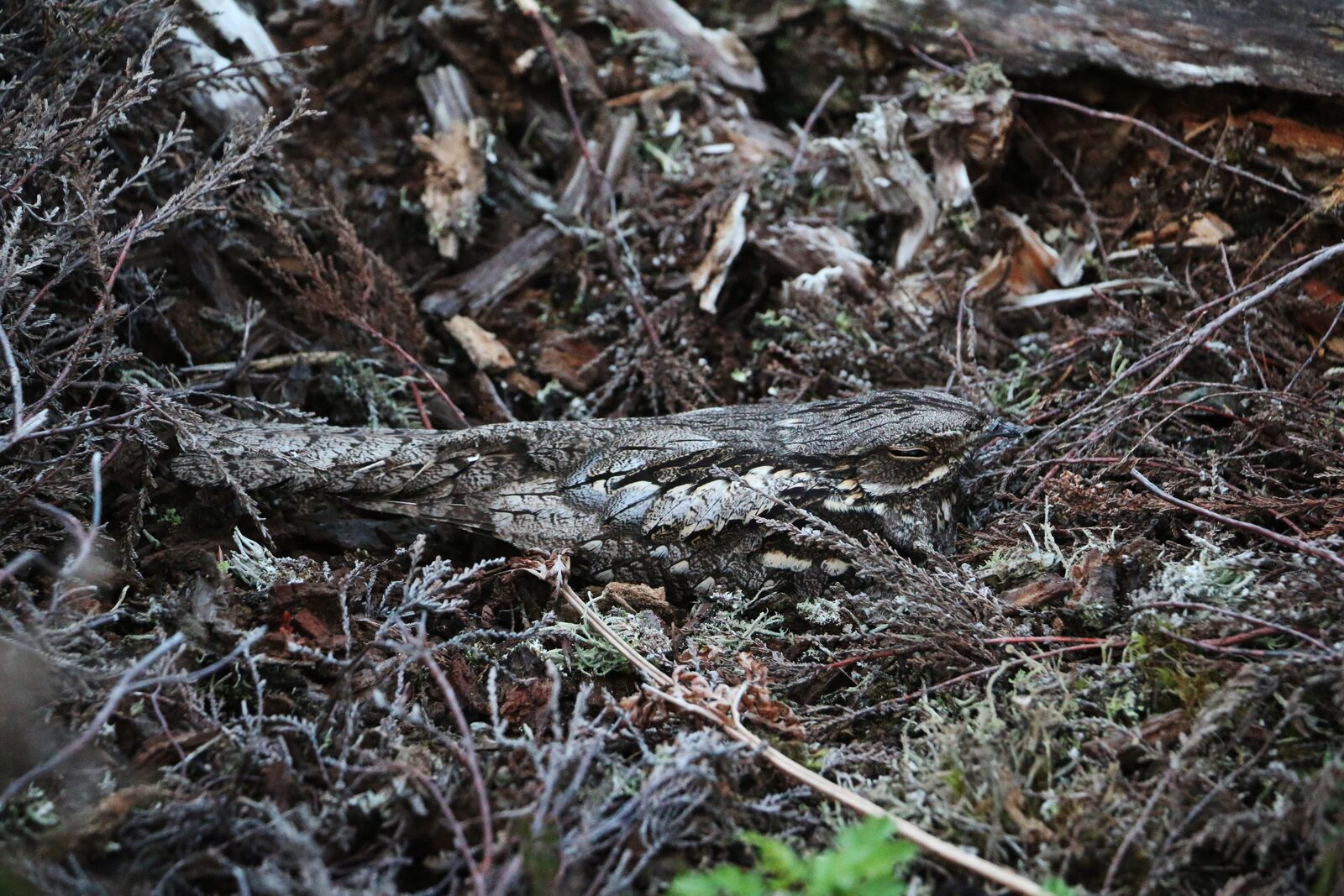
Female Nightjar on nest. Photo  © Jacques Turner-Moss

Over the past month and a half I've spent pretty much every night out tagging, tracking or nest-finding Nightjars at two sites at either end of Wales. Both sites are major wind farm developments in the construction stages and the Nightjar monitoring is part of agreed planning conditions aimed at avoiding disturbance to breeding pairs and assessing any effect of the developments on the resident Nightjar populations long-term. Two or three years of pre-construction monitoring at each site will be followed by post construction surveys and the results can then be used to inform any similar future developments.


One of this year's nests in South Wales was very close to a major track upgrade and, whilst I was sure the passing lorries etc wouldn't disturb the birds during the day as long as a suitable buffer zone was instigated, the earthmovers did need to get quite close! As there was a significant cost to any delay Mike Shewring and Dan Carrington (onsite ecologists for Natural Power Limited) and I agreed to install a nest-camera to monitor any disturbance so that operations could be go ahead but be instantly halted if the birds were disturbed. As the above clip shows, all progressed well and the single hatched chick fledged successfully last week.

Another part of the monitoring, being conducted in conjunction with the British Trust for Ornithology and Natural Power Limited, is using state-of-the-art GPS dataloggers to record the Nightjar's location to a high degree of accuracy at frequent intervals in order to study their foraging patterns. We tried this a few years ago using conventional radio-tags and it was almost impossible to keep track of the birds. These new tags record the bird's location to within 10m every 3 minutes!!! 


The downside is they cost about £350 each and you need to retrap the bird to get them back so that the data stored onboard can be downloaded. We have so far deployed 4 tags in South Wales and on the night of the 21st/22nd, on one of  my most successful Nightjar trapping sessions ever (7 birds - 4 new and 3 retraps), Mike and I recovered our first tag.


As the map above shows the bird in question didn't move very far in the 5 days the tag was recording but the results are, none-the-less, nothing short of amazing - effectively over 650 retraps in 5 days!!  There is a massive potential here to finally get to grips with exactly how these upland Nightjars cope with the vagaries of the Welsh weather and where exactly they go to find moths when it is doing what it often does in Wales - p***ing it down!!


Male Nightjar brooding two large young.  Photo © Steve Parr

Despite the awful summer we are having the Nightjars seem to be doing rather well. So far 11 chicks have fledged from 7 first brood nests and 4 of the females are currently back down on eggs so hopes are high that we can deploy and retrieve a few more tags yet.

Saturday, 18 July 2015

Romania 2015 - part 1

Once again Silvia and I find ourselves in the heart of Transylvania for 8 weeks surveying the bird life as part of a 5 year pilot project into how beneficial the traditional farming methods are to all the wildlife out here. While Silvia is carrying out point count surveys in the surrounding of each of the 8 villages we are surveying, I am misting netting at 1 sometimes 2 sites in each village to closer monitor individual birds and to get a better idea of population sizes of certain species. Netting always seems to turn up the odd species that tend to hide away in the thickets and avoid being detected during the point count.


With so many awesome species out here it's difficult to choose which photos to post, so below are a small selection of some of the birds that have stood out for me.


Wryneck
Quail
Red-backed Shrike
Lesser Grey Shrike
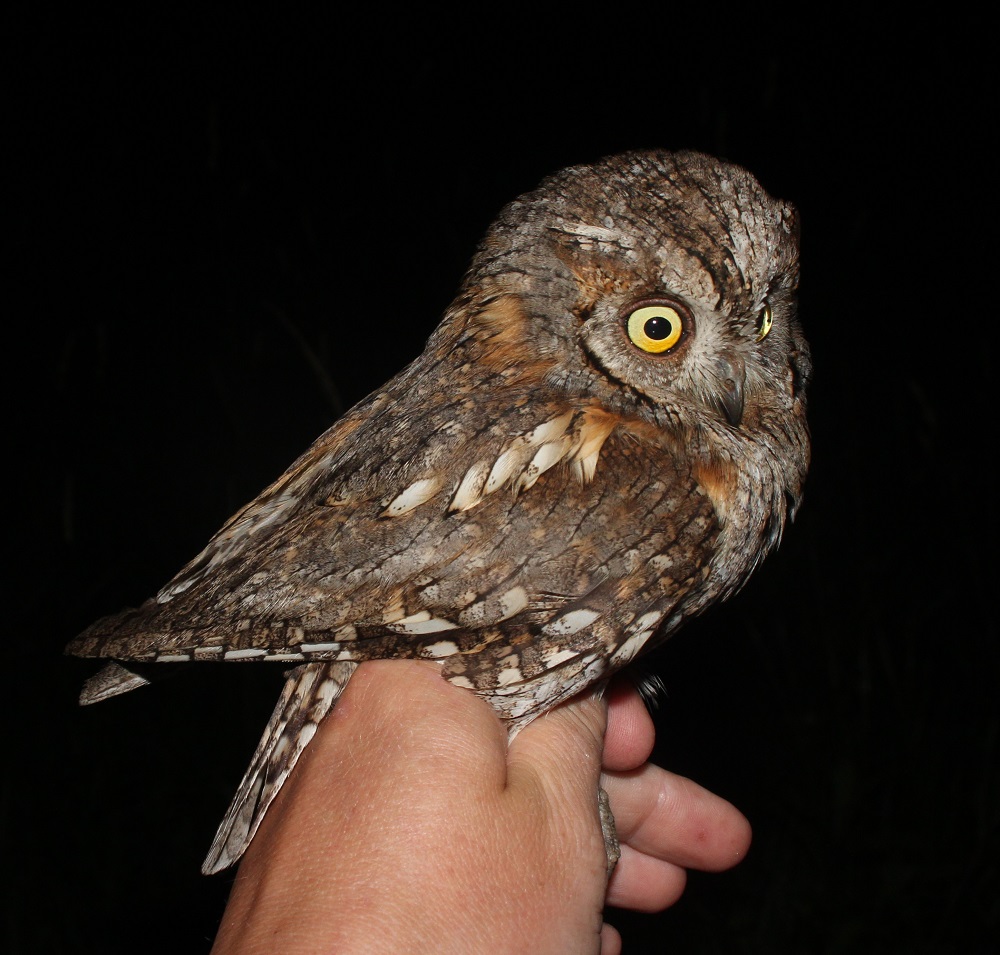
 Scops Owl

As nice as it is to catch all of these species, we're also catching lots of species that were once common all over the UK. Species such as Tree Sparrow, Woodlark, Green and Lesser Spotted Woodpecker are still very common here, and hopefully with the work we're doing here with Operation Wallacea and Fundatia Adept they will continue to be common throughout the region.


 Lesser Spotted Woodpecker
 Green Woodpecker

We are half through the project and so far we've caught just short of 500 birds of 34 species. At the end of the 8 weeks I will post a complete list of the totals. Some of the totals are already standing out. I've ringed more Tree Sparrows in just 4 weeks here than the Mid Wales Ringers have collectively ringed since we started the blog in 2011!!

Friday, 17 July 2015

That ain't no Nightjar!!

At the moment I am in the thick of two Nightjar contracts, one in South Wales and one in North Wales. This means that I spend most of my time in a state of near continuous sleep deprivation in midge infested forests or driving from one end of Wales to the other.  I'm not moaning, Nightjar's are one of my favourite birds and I am very lucky to be able to make a living studying them. The problem with Nightjar ringing, if there is one, is that because of the time of day and the places the nets are set that is pretty much all you catch - Nightjars or nothing. Last night in South Wales, Mike Shewring, Dan Carrington and I had a  large and welcome addition to the night's Nightjar catch. Whilst driving from one part of the forest to another I had noticed a couple of birds roosting on a low cliff just above the track. Having previously failed (by the narrowest of margins) to lamp one of them off the ledge I was pleased to see they were back again last night and willing to let me have another go! 


An iPhone record shot just before it ripped a great big gash in my thumb!!

I have ringed plenty of Ravens in my time, having studied them in Wales and Shropshire, but rarely did I manage to catch an adult. They seemed to be able to spot any sort of clap-net or cage trap as something to stay well away from, confirming their status as perhaps the world's most intelligent bird.  A short while later, wrestling one in the dark, it didn't seem like such a good idea after all!!  Ravens are well known for being able to tear flesh off carcasses and it appears you don't have to be dead for them to try!


Sunday, 5 July 2015

Dyfi Osprey ringing 2015


I was going to put a short post up about the Dyfi Osprey ringing this year but why bother when Emyr has already done such a brilliant job? Here's the link - I'm sure you will enjoy the video (and the soundtrack)

http://www.dyfiospreyproject.com/blog/2015/07/ringing-2015